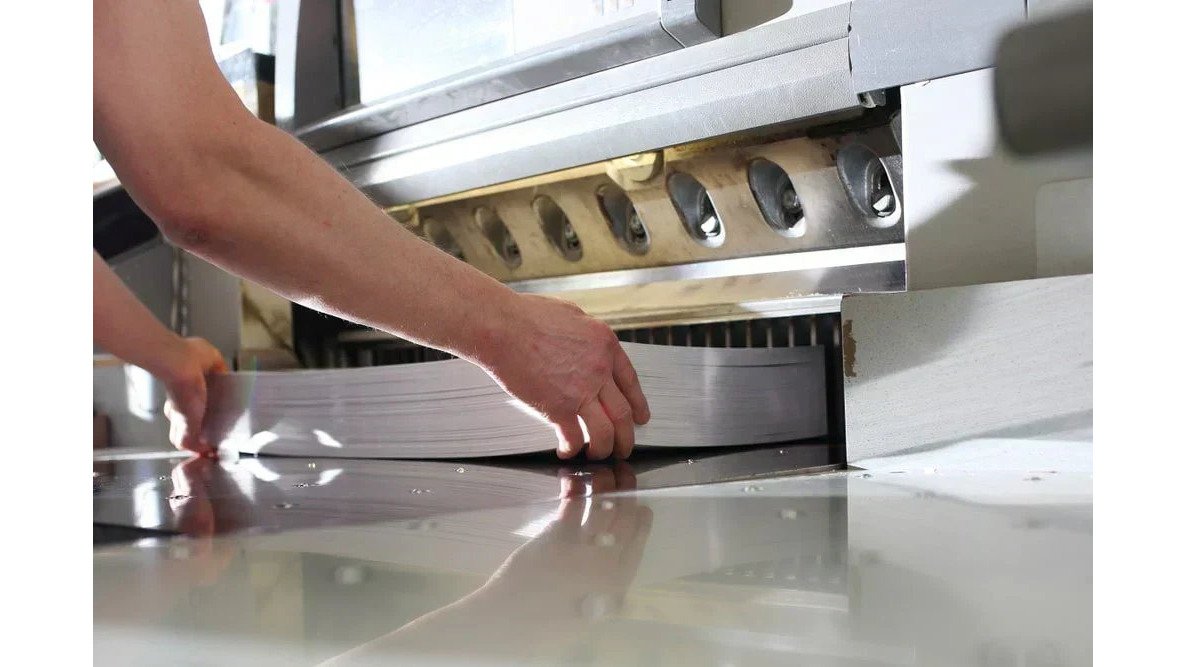
 ultimate-guide
Industrial Guillotine Blade Sharpening Services
Table of Contents
- What Industrial Guillotine Blade Sharpening Services Actually Fix
- Signs of a Dull Guillotine Blade You Shouldn't Ignore
- How to Sharpen Wood Chipper Knives Without Damaging Temper
- Industrial Blade Sharpening Turnaround Time: What to Expect
- The Precision Grinding Process: From Pickup to Inspection
- DIY vs. Professional Sharpening: A Cost-Benefit Breakdown
- Troubleshooting Common Cutting Issues Before You Blame the Blade
- Conclusion
- Frequently Asked Questions
Last Updated: September 16, 2026
What Industrial Guillotine Blade Sharpening Services Actually Fix
Industrial guillotine blade sharpening services restore the cutting edge on paper cutter knives, three-knife trimmer blades, and shear blades so machines cut square, clean, and fast again. At The Cutting Edge Grinding & Supply Co., we've spent over two decades regrinding blades for printing, converting, metalworking, and plastics shops. The same three problems show up on almost every worn blade: a rolled edge, a lost bevel angle, and heat damage from dry grinding.
Blade Geometry and Bevel Angles: Why Precision Matters
Blade geometry, bevel angle, edge radius, and relief, determines how a blade enters material and how long it stays sharp. Get the angle wrong by a degree or two and the blade either dulls fast or bites too hard.
Signs of a Dull Guillotine Blade You Shouldn't Ignore
The clearest sign of a dull guillotine blade is a cut that requires noticeably more force, often paired with a ragged or fuzzy edge on the bottom sheets of a lift. Dullness creeps in over hundreds of cuts until the operator is pushing the clamp harder and trimming the same stack twice.
Watch for these signals:
- Increased cutting force needed to complete a lift that used to slice cleanly
- Fuzzy or torn bottom sheets, especially on coated or heavy stock
- Burrs and micro-chipping visible along the edge under good light
- A polished, shiny line along the bevel where the edge has rolled over
- More frequent clamp pressure adjustments to hold the stack steady
- Cutting accuracy drift, where trimmed stacks come out slightly out of square
How to Sharpen Wood Chipper Knives Without Damaging Temper
Wood chipper knives and industrial guillotine blades share the same metallurgy problem: both are hardened steel, and both lose their temper if a grinder pushes heat into the edge faster than coolant can pull it out. The same rules protect a guillotine blade, a three-knife trimmer set, and a shear blade.
The rules that matter for any hardened industrial blade:
- Never grind dry. Flood coolant carries heat away from the edge as it forms. A dry pass on a hard blade can pull temper in seconds.
- Take light passes. Heavy cuts generate heat faster than coolant can remove it, and the damage happens below the surface where you cannot see it.
- Keep the blade moving. Holding the wheel in one spot builds a hot spot and a soft spot in the same place.
- Watch for straw or blue discoloration. That color is temper leaving the steel. A straw tint means the edge has already been compromised.
- Match the original bevel angle so the blade seats correctly in the holder and cuts to spec.
Coolant and Speed: The Two Variables That Protect Hardness
Coolant and wheel speed decide whether a sharpened edge keeps its hardness. Run the wheel too fast or starve the cut of coolant and the edge overheats in seconds, even if the blade looks fine coming off the machine.
Safety Protocols for Handling Heavy Industrial Blades
Sharpening is only half the risk. Removing, transporting, and reinstalling a guillotine blade or trimmer knife is where most injuries happen.
- Wear cut-resistant gloves and safety glasses any time the edge is exposed, even for a quick inspection.
- Use a blade carrier or shipping crate sized to the blade. A bare guillotine blade in a cardboard box is a hazard to everyone who touches it.
- Tag the blade with its bevel angle, material, and machine model before it leaves the shop floor. This protects the blade and speeds the regrind.
- Two-person lift for anything over roughly 50 pounds. A three-knife trimmer set is not a one-person job.
- Block the machine and lock out power before pulling the knife holder. A guillotine that cycles during a blade change is a fatal-event scenario.
- Store spare blades in a rack, edge down or edge protected, never leaning loose against a wall.
Industrial Blade Sharpening Turnaround Time: What to Expect
Industrial blade sharpening turnaround time depends on blade type, quantity, and whether the edge needs repair beyond a standard regrind. Most standard guillotine and trimmer blades move through a professional shop in a few business days; a chipped or badly damaged edge takes longer because it needs more stock removed before the final grind.
Here is the practical breakdown:
| Situation | Typical Handling | What Drives the Time |
|---|---|---|
| Standard regrind, single blade | Quick turnaround | Queue position, blade length |
| Full set of trimmer knives | Batch processing | Matching all three knives to one tolerance |
| Chipped or damaged edge | Extended service | Extra stock removal, inspection |
| Emergency downtime | Priority scheduling | Availability, shipping distance |
What Actually Slows a Job Down
Most delays are not grinding time. They are intake problems.
- No bevel angle on the tag. The shop has to reverse-engineer what you already knew, which adds a day or more.
- Wrong or missing machine model. A blade that fits the holder but was ground for a different cutter will come back and cut poorly.
- Poor packaging. A blade that shifts in transit can chip, and a chipped edge means extra stock removal before the final grind.
- Mixed materials in one shipment. High speed steel and tungsten carbide need different wheels, so they cannot run in the same batch.
- No spare blade on the shelf. If the machine is down while the only blade is out for service, every day of turnaround is a day of lost production.
Shipping, Pickup, and Downtime Math
For most shops, a scheduled pickup and delivery route beats one-off shipping. It keeps blades moving on a predictable cycle and lets the sharpening shop plan wheel setup around your blade material.
- Operator hours spent pulling, packing, and reinstalling the blade
- Production hours lost while the cutter sits idle
- Rework on stacks cut with a marginal edge before the blade was pulled
- Machine wear from running a dull blade against the knife holder
The Precision Grinding Process: From Pickup to Inspection
Precision grinding is a controlled stock-removal process that re-establishes the bevel angle, removes the damaged edge, and finishes the cutting edge to a consistent tolerance. It is not the same as running a blade across a bench grinder. The goal is a blade that cuts to spec, not just one that feels sharp.
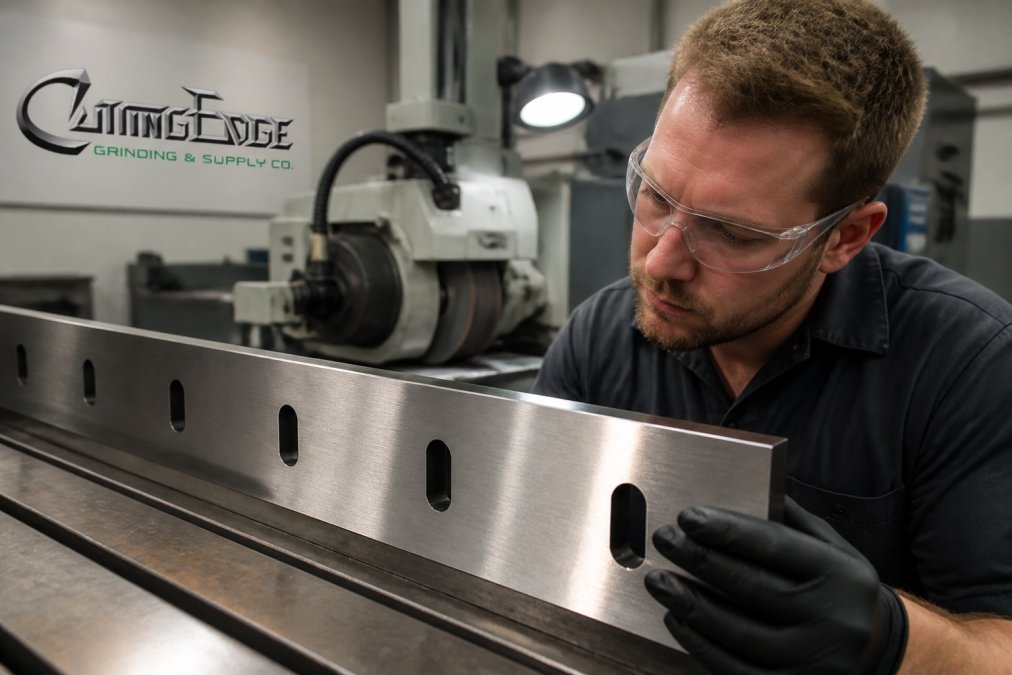
A typical professional process looks like this:
- Intake and inspection to log blade type, material, dimensions, and damage
- Angle verification against the machine's spec or the customer's requirement
- Setup on a precision grinder with the correct wheel for the blade material
- Coolant-fed grinding in controlled passes to protect hardness
- Honing and burr removal to clean the edge
- Final inspection against tolerance before packing
Quality Control and Tolerance Checks
Quality control is where a sharpening service proves the blade is right, not just sharp. Tolerance checks confirm bevel angle, edge straightness, and thickness are within spec before the blade ships.
DIY vs. Professional Sharpening: A Cost-Benefit Breakdown
DIY sharpening requires the right grinder, the right wheel for the blade material, and someone who knows how to hold an angle. Without these, potential 'savings' can be offset by issues like burned edges, short blade life, and rework.
| Factor | DIY In-House | Professional Service |
|---|---|---|
| Equipment cost | Grinder, wheels, coolant setup | None |
| Skill required | High, angle-sensitive | Handled by the shop |
| Risk of temper damage | High without coolant control | Controlled |
| Tolerance consistency | Varies by operator | Verified per blade |
| Time cost | Operator hours per blade | Minimal for your team |
| Blade life | Often shortened | Extended with correct grind |
Troubleshooting Common Cutting Issues Before You Blame the Blade
Not every bad cut is a blade problem, and not every blade problem is fixed by sharpening. Before you pull the knife, check the machine.
- Out-of-square cuts often trace to a misaligned back gauge, not a dull edge
- Torn bottom sheets usually mean a dull or rolled edge
- Inconsistent cut depth can come from clamp pressure or a worn knife holder
- Chipping along the edge points to a bevel angle that's too steep for the material
- Excessive force required is the classic sign of a blade past its edge
Conclusion
Downtime is the real cost of a dull blade, showing up as rework, slower cuts, and machine wear long before the blade fails. The Cutting Edge Grinding & Supply Co. has spent over two decades restoring guillotine, trimmer, shear, and granulator blades to their sharp, efficient edges, with precision grinding, verified tolerances, and turnaround built around your production schedule. We work with shops of every size and handle the full range of blade types, so you're not juggling multiple vendors.
Frequently Asked Questions
Can industrial guillotine blades be sharpened multiple times?
Yes. A guillotine blade can typically be reground several times before the hardened edge layer is consumed. Each sharpening removes a small amount of material, so blade life depends on the original hardness depth and how well the blade is maintained between services. Precision grinding removes only what is needed, which preserves more of the blade's usable life compared to aggressive manual sharpening. Once the blade reaches its minimum thickness or the edge no longer holds, replacement is the practical option.
What are the signs that an industrial guillotine blade needs professional sharpening?
The most common signs of a dull guillotine blade include ragged or torn cut edges instead of clean cuts, a noticeable increase in cutting force, and more frequent paper jams or misfeeds. You may also see shiny worn spots along the bevel, hear a heavier thunk during the cut cycle, or notice the blade pulling stock instead of slicing it. Micro-chipping and burr formation along the edge are additional indicators that the blade needs regrinding rather than continued use.
How does professional sharpening affect the temper and hardness of a guillotine blade?
Professional precision grinding uses controlled coolant flow and measured feed rates to keep blade temperature low during material removal. That matters because excessive heat draws the temper out of high speed steel, tungsten carbide, and tool steel, softening the edge and shortening blade life. A properly equipped shop monitors temperature and removes only the minimum stock needed to restore the bevel angle. The result is a blade that keeps its hardness and edge retention instead of failing early.
What is the typical turnaround time for industrial guillotine blade sharpening services?
Turnaround time depends on blade size, quantity, and current shop workload. Many providers offer scheduled pickup and delivery so blades are collected, ground, inspected, and returned within a defined window rather than sitting in a queue. For shops running production schedules, ask about expedited options and whether the provider stocks loaner blades. Discuss your downtime limits upfront so the provider can plan the job around your machine schedule instead of the other way around.