 how-to
How to Reduce Blade Downtime: A 2026 Guide
Table of Contents
- Step 1: Build an Industrial Blade Maintenance Schedule That Prevents Failures
- Step 2: Catch the Signs of Dull Machine Knives Before They Cause Downtime
- Step 3: Optimize Blade Tension, Alignment, and Coolant Flow
- Step 4: Decide Between Blade Replacement vs Sharpening
- Step 5: Use Monitoring and Diagnostics to Reduce Blade Downtime
- Step 6: Cut Waste and Cost Through Blade Life Management
- Common Mistakes That Increase Blade Downtime
- Frequently Asked Questions
Last Updated: October 4, 2026
Step 1: Build an Industrial Blade Maintenance Schedule That Prevents Failures
Learning how to reduce blade downtime starts with one shift in thinking: stop fixing blades when they break and start maintaining them on a fixed schedule. At The Cutting Edge Grinding & Supply Co., we have spent more than two decades sharpening and supplying machine knives, and the shops that lose the least production time are never the ones with the newest equipment.
An industrial blade maintenance schedule is a calendar of daily, weekly, and monthly tasks that keeps cutting edges sharp and machines aligned before small wear turns into a breakdown.
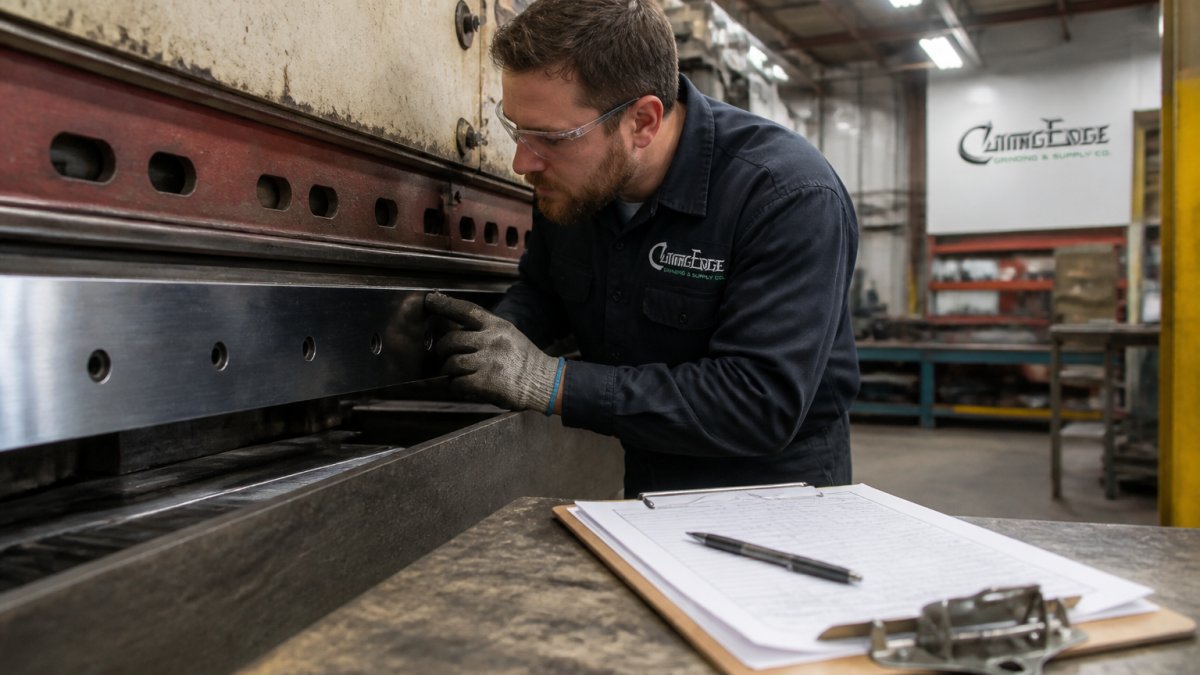
Daily, Weekly, and Monthly Tasks by Machine Type
Different machines fail in different ways, so the schedule should match the equipment:
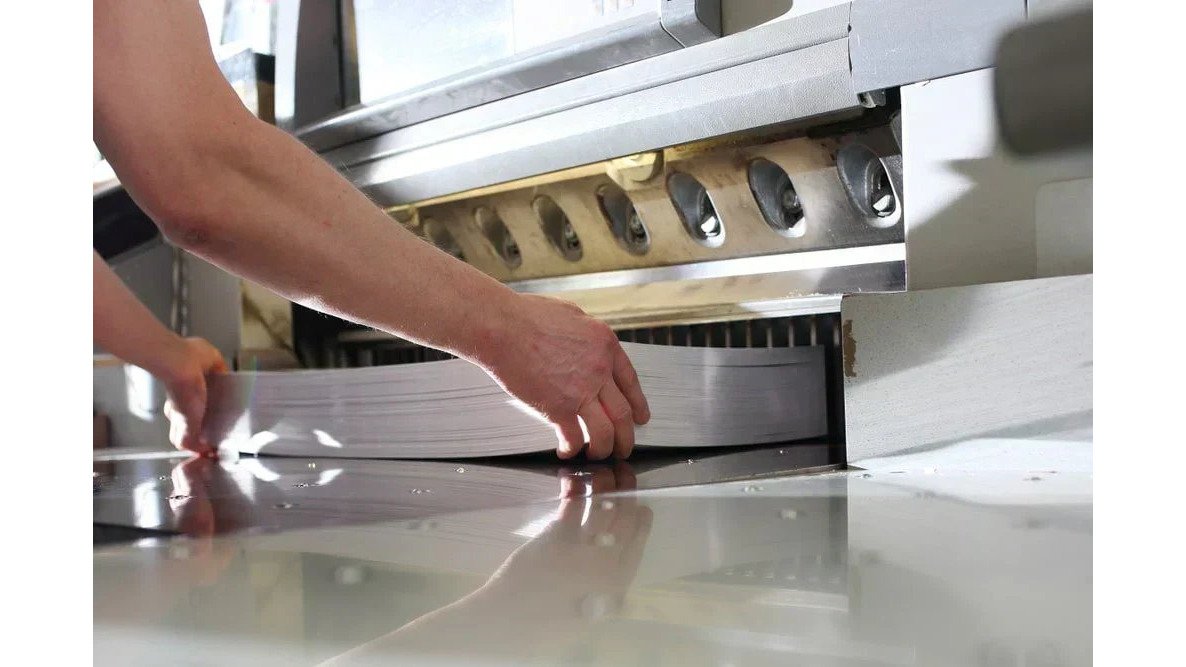
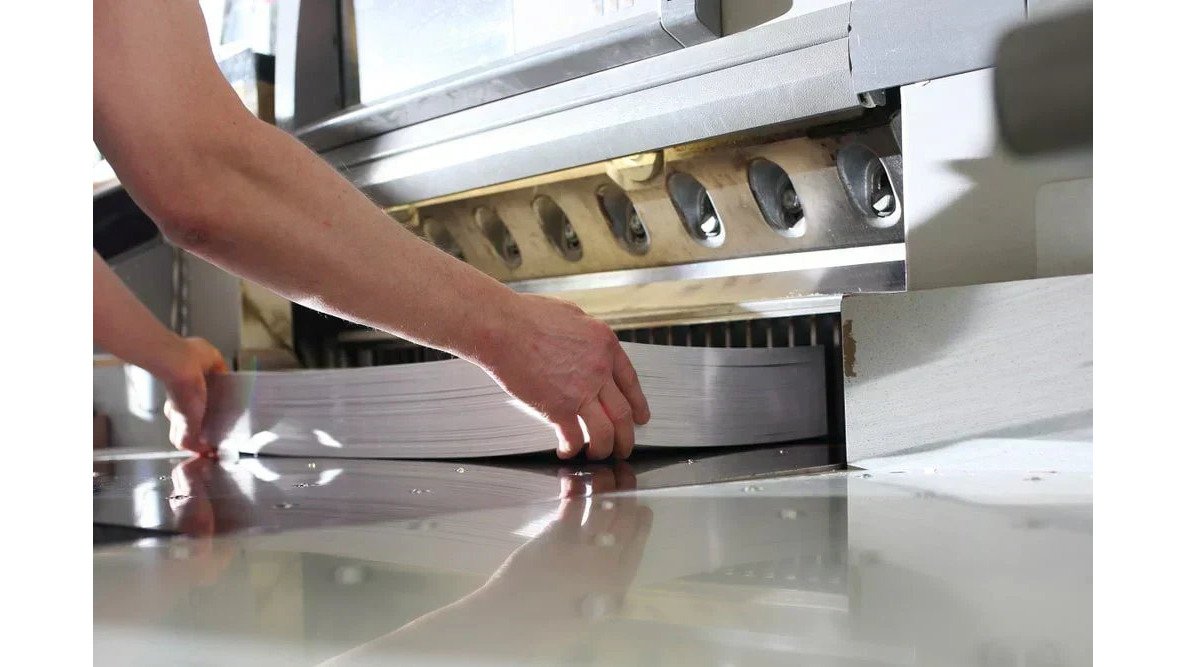
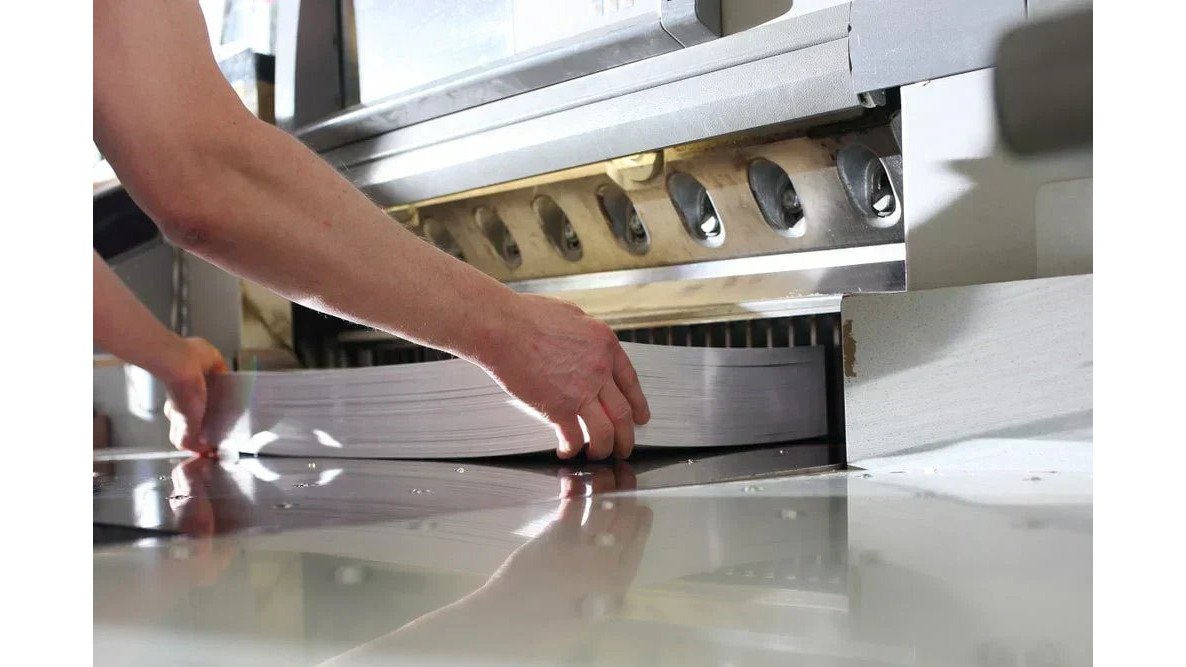
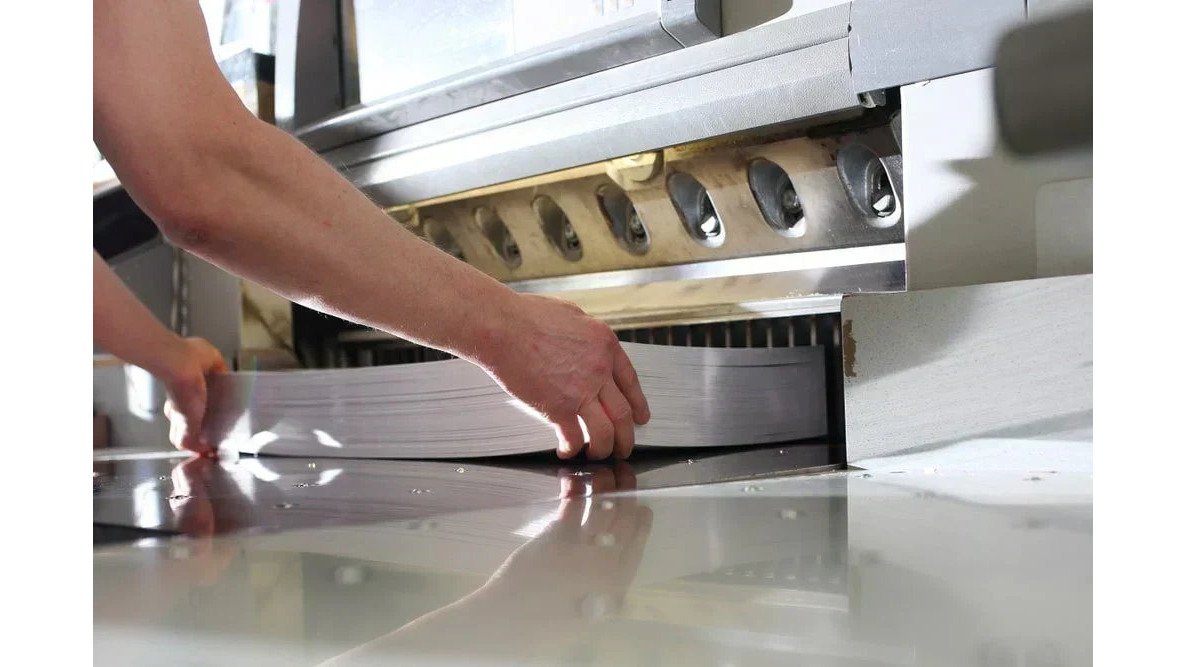
- Guillotine and three-knife trimmers: daily clamp and cut checks, weekly blade-edge inspection, monthly tension and alignment review
- Granulators and shredders: daily screen and chamber clearing, weekly rotor and bed knife checks, monthly full blade inspection
- Shears and press brake tooling: daily clearance checks, weekly edge inspection, monthly regrind assessment
The key is consistency. A short daily check catches problems while they are cheap to fix.
Step 2: Catch the Signs of Dull Machine Knives Before They Cause Downtime
Signs of dull machine knives show up long before a blade fails completely. Most downtime is not sudden. It builds quietly for days or weeks while operators work around the symptoms.
Watch for these warnings:
- Higher cutting force: operators push harder or the machine strains
- Ragged or burred edges: cuts look torn instead of clean
- More noise and vibration: the machine sounds rougher than usual
The trap is treating these as normal. A dull blade stresses the drive system and can cause cascading damage to guides and bearings, so a blade swap that takes minutes prevents a repair that takes days.
Step 3: Optimize Blade Tension, Alignment, and Coolant Flow
Correct blade tension, drive system alignment, and coolant flow do more for blade life than any single upgrade. Get these three right and you cut both wear and downtime.
Tension and Drive System Alignment Checks
Check tension against the machine maker's spec, then again after the first hour of running, because new blades stretch. Drive system alignment matters just as much: a belt or shaft out of line makes the blade work at an angle, wearing one side faster and shortening blade life.
- Verify tension at every blade change
- Inspect belts, pulleys, and couplings for wear
- Re-check alignment after any maintenance on the drive
Coolant Flow and Chip Removal Basics
Coolant manages heat, and chip removal keeps the cut clear. When coolant flow drops, heat builds and edges dull fast. When chips pile up, they get dragged back through the cut and damage the edge.
- Confirm coolant reaches the cut point, not just the tank
- Clean filters and nozzles on a set schedule
- Clear chips and swarf before they pack the chamber
Step 4: Decide Between Blade Replacement vs Sharpening
Blade replacement vs sharpening is a judgment call, not a rule. Sharpening restores a worn edge at a fraction of a new blade's cost and can be repeated several times before the blade reaches minimum thickness. Replacement makes sense when the blade is cracked, chipped past the grind line, or worn below spec. Attach a number to the decision and it gets easier.
The Decision Table
| Condition | Action | Why |
|---|---|---|
| Edge dull, body sound | Sharpen | Cheapest path to a sharp edge |
| Small nicks | Sharpen | Removed in the first grind pass |
| Cracks or deep chips | Replace | Sharpening cannot fix a broken body |
| Below minimum thickness | Replace | Unsafe and unstable at speed |
| Repeated fast wear | Investigate | The blade may not be the real problem |
| Edge holds but cut quality drifts | Check alignment first | The blade may be fine; the machine is not |
Cost Per Cut: The Number That Settles the Argument
Purchase price is the wrong comparison. The right one is cost per cut:
Cost per cut = (blade cost + sharpening cost over its life) ÷ total cuts delivered
Work it through for a standard blade versus a premium blade on the same machine:
- A standard blade may take several sharpening cycles before it hits minimum thickness, and each cycle removes a fixed amount of material. A premium blade with more usable body may accept more cycles or hold its edge longer between grinds.
- A premium blade that costs more up front but delivers more cuts per dollar across its full life wins on cost per cut despite losing on sticker price.
- If a standard blade is cheap enough and your material is forgiving, it can win. The math decides, not the marketing.
Track cost per cut by machine and blade type for a quarter. Most shops find the answer is not uniform: the premium blade pays off on the high-volume machine, while the standard blade is fine on the low-volume one.
Minimum Thickness and Safety
Every blade has a minimum thickness set by the machine maker or blade supplier. Below that line it can flex, chatter, or fail under load, a safety issue, not just a quality one. Know the number for each blade on your floor and mark it on the blade or in the log. When a blade reaches it, it is done, no matter how good the edge looks.
The Operator Factor
Most replacement decisions go wrong for human reasons, not mechanical ones:
- Running to failure: operators push a dull blade to finish an order, which stresses the drive and turns a sharpening into a repair.
- Sharpening a cracked blade: a crack cannot be ground out; it propagates. Train operators to flag cracks and chips immediately.
- Wrong blade for the job: using a blade past its intended material or thickness range wears it fast and can be unsafe.
A short training session on inspecting an edge, flagging a blade, and logging a change pays for itself faster than most equipment upgrades. The machine does not decide to run a dull blade, a person does.
If a blade wears out far faster than expected, look at tension, alignment, material, and operator handling before blaming the blade.
Step 5: Use Monitoring and Diagnostics to Reduce Blade Downtime
The fastest way to reduce blade downtime is to know a blade is failing before it does. Monitoring turns maintenance from reactive to planned, but only if you measure the right signals and act on trends, not single readings.
Vibration Analysis, Sensor Data, and Maintenance Logs
Start with the three signals that flag a failing edge earliest:
- Vibration analysis: rising vibration points to imbalance, misalignment, or a worn edge. On a granulator or chipper, a rotor or knife-holder imbalance shows up as a once-per-revolution peak, while a dull edge raises broadband vibration across the spectrum. Trend the overall level weekly, a steady climb over several shifts is the warning, not one noisy reading.
- Motor load and current draw: a dull blade cuts less efficiently, so the drive motor pulls more amps to hold the same feed rate. Log amps at a fixed material and feed rate; a 5-10% drift above baseline usually means the edge is going away. It is the cheapest sensor on most machines because the drive already reports it.
- Temperature at the cut zone: friction heat rises as an edge dulls. An infrared spot check or thermocouple near the cut point catches the change before quality drops.
A simple log beats a complex system you never update. The goal is a baseline you can compare against, not a dashboard nobody reads.
Turning Signals Into a Predictive Maintenance Routine
Predictive maintenance is not a product you buy, it is a loop you run, with four steps:
- Baseline: run a known-good blade on known material and record vibration, amps, and cut temperature.
- Trend: capture the same readings on a fixed interval (per shift or per day) and plot them.
- Threshold: set an action limit, for example, schedule a blade change when motor amps rise a set percentage above baseline or vibration crosses a defined band.
- Verify: after each change, confirm the readings return to baseline. If they do not, the blade was not the root cause.
Most practitioners find the first two steps, baseline and trend, deliver most of the value, because they convert guesswork into a date on the calendar. IoT sensors and connected monitoring platforms simply automate steps two and three; they do not replace the discipline of steps one and four. If you already have a programmable logic controller or drive on the machine, you likely have the amp and run-time data you need without adding hardware.
A Worked Example of the Loop
Suppose a guillotine trimmer normally draws 18 amps at its standard feed. Over two weeks the logged average creeps to 20 amps while cut quality holds. That 11% rise is your early warning: the edge is dulling, the drive is compensating, and the next step is a quality failure or a stalled cut. You schedule a sharpening during the next changeover instead of waiting for a breakdown.
Step 6: Cut Waste and Cost Through Blade Life Management
Blade life management is where maintenance turns into money: every extra cut spreads a blade's cost across more production, and every avoided failure keeps the line running.
Two angles most shops overlook:
- Cost-benefit of premium vs. standard blades: a blade that costs more but lasts far longer often wins on cost per cut, not purchase price
- Sustainability and recycling: worn blades are steel, and scrap value plus responsible recycling can offset part of your spend
Track cost per cut, not cost per blade. That single number tells you whether a premium blade or a sharpening program is paying off.
Common Mistakes That Increase Blade Downtime
Most blade downtime traces back to a handful of repeat mistakes:
- No schedule: maintenance happens only when something breaks
- Ignoring early signs: dull blades run until they fail
- Skipping tension and alignment: new blades wear out fast for no clear reason
Fix the process and the blades take care of themselves.
Blade downtime is a process problem, not a blade problem. The Cutting Edge Grinding & Supply Co. supports that work with over two decades of experience, precision sharpening that restores blades to a sharp, efficient edge, and a full collection of new machine knives and accessories for printing, converting, metalworking, and plastics.
Frequently Asked Questions
What are the primary causes of industrial blade failure?
Most blade failures trace back to four causes: improper blade tension, misaligned blade guides or drive systems, inadequate coolant flow that lets heat build up, and running blades past their useful edge. Mechanical stress and component fatigue compound these problems over time. Catching wear early through vibration analysis and maintenance logs prevents small issues from becoming cascading damage that takes a machine offline for hours.
How often should industrial machine knives be sharpened?
Sharpening intervals depend on material, throughput, and blade type. A guillotine cutting paper may run weeks between sharpenings, while a granulator processing filled plastics might need attention in days. Build your industrial blade maintenance schedule around cut quality and cycle time rather than a fixed calendar. When you notice increased force needed, rough edges, or rising vibration, schedule sharpening or replacement before quality drops further.
When should I choose blade replacement vs sharpening?
Sharpening restores the cutting edge and costs less than a new blade, so it makes sense when the blade body is sound and enough material remains for repeated grinds. Replacement wins when the blade has cracks, deep chips, or has been sharpened so many times the geometry no longer holds. For high-wear applications like shredder and granulator blades, track how many sharpenings each blade takes before failure to decide when replacement pays off.
How can predictive monitoring reduce cutting room downtime?
Predictive monitoring uses vibration analysis, sensor data, and maintenance logs to flag blade wear before it causes a breakdown. Instead of reacting to a failed blade mid-shift, you schedule intervention during planned changeovers. This shifts blade maintenance from reactive to planned, which cuts unplanned downtime and extends blade life. Even simple steps like logging cut quality daily and tracking cycle time trends give you the data to act earlier.