 how-to
How to Sharpen Carbide-Tipped Paper Knives Safely
Quick Summary
Yes, carbide-tipped knives can be sharpened, but only with diamond abrasives, since carbide is harder than ordinary stones and sandpaper. Check the blade for chips, cracks and braze-joint damage first, because a badly damaged blade should not be sharpened.
- Diamond grit is the only common abrasive harder than carbide and cuts it cleanly.
- Run a dry grinding wheel at light pressure, since overheating can cause the edge to crack.
- Confirm the blade is carbide-tipped, solid carbide or steel before you start sharpening.
- Keep the original bevel angle and use even, consistent strokes on every pass.
- Send chipped, cracked or precision-ground blades to a professional sharpening service.
Table of Contents
- Can Carbide-Tipped Paper Knives Be Sharpened?
- Identifying Your Blade Material and Construction
- What You Need Before Starting a Carbide-Tipped Blade Sharpening Job
- Step-by-Step Industrial Paper Knife Sharpening Process
- Paper Cutter Blade Sharpening: Safety, Mistakes, and Paper-Cut Quality
- When to Sharpen In-House and When to Use a Professional Blade Sharpening Service
- Booking Your Next Blade Sharpening Job Without Long Downtime
- Frequently Asked Questions
Can Carbide-Tipped Paper Knives Be Sharpened?
Yes, carbide-tipped knives can be sharpened, but only with the right equipment and method. Carbide is one of the hardest materials used in cutting tools, so a standard sharpening stone or sandpaper is generally not effective against it. Diamond abrasives are the tool typically used for the job.
Sharpening is not always the right answer, though. Some blades are too worn, chipped or cracked to restore safely. Check the blade for these problems before you start.
Last Updated: November 5, 2026
Why carbide requires diamond abrasives
Carbide is made from tungsten carbide particles bonded with cobalt. That makes the edge extremely hard but also brittle. Ordinary abrasives like aluminum oxide break down quickly against it and leave an uneven edge.
Diamond grit is the only common abrasive harder than carbide. It cuts the tungsten carbide cleanly and keeps the bevel consistent. Diamond wheels and diamond-coated hones are commonly used for sharpening carbide-tipped knives.
Watch out: running a dry grinding wheel too fast can overheat the edge, causing it to lose hardness or crack. Use light pressure and keep the blade cool.
Identifying Your Blade Material and Construction
Before you sharpen anything, confirm what the blade is made of. A carbide-tipped paper knife is not the same as a solid carbide blade or a conventional steel knife, and each requires a different approach. Getting this wrong is the most common reason a sharpening job fails.
Carbide-tipped construction. A carbide-tipped paper knife has a steel body with a carbide strip brazed or bonded to the cutting edge. The carbide strip is typically thin, often a few millimeters wide, and runs the full length of the edge. The braze joint is the weak point: it can fail under heat or impact, so you must keep grinding temperatures low. The steel body gives the blade toughness, while the carbide strip provides wear resistance.
Solid carbide construction. A solid carbide blade is carbide throughout, not just at the edge. These are harder and more brittle than tipped blades. They require slower speeds, lighter passes, and more careful heat management. A solid carbide paper knife will chip rather than bend if you drop it or pry with it.
Conventional steel construction. A full-steel knife has no carbide at all. It can be sharpened with conventional abrasives like aluminum oxide or silicon carbide stones. If you try to sharpen a steel blade with a diamond wheel, you will remove material too aggressively and shorten its life.
Look for these clues to tell them apart:
- Check the spec sheet or part number from the manufacturer. This is the most reliable method.
- Look for a brighter, grey, very hard strip along the edge. That strip is the carbide.
- Test for hardness with a file. A carbide edge will barely scratch; steel will show a clear mark.
- Tap the blade lightly with a brass rod. Carbide-tipped blades often sound different from solid steel.
- Ask the supplier if you are not sure. Guessing is not worth the risk of ruining a blade.
Note the blade's bevel angle as well. Keeping the original angle is what preserves the cutting geometry. If you change the bevel, the knife may cut poorly even if it feels sharp.
Watch out: a carbide strip that looks intact can have a hairline crack at the braze joint. Flex the blade gently or inspect it under magnification before you commit to sharpening.
What You Need Before Starting a Carbide-Tipped Blade Sharpening Job
Gather your tools and supplies before you begin. A good setup makes the job faster and safer.
- A diamond wheel or diamond hone sized for your blade
- A stable grinder or sharpening fixture
- Coolant or a light oil to keep the edge cool
- Safety glasses, gloves and hearing protection
- A flat reference surface and a measuring gauge
- A marker to show where you are grinding
Set up the work area so the blade stays steady. Clamp it or use a jig if the blade is long or heavy.
Step-by-Step Industrial Paper Knife Sharpening Process
Follow these steps in order for a clean result.
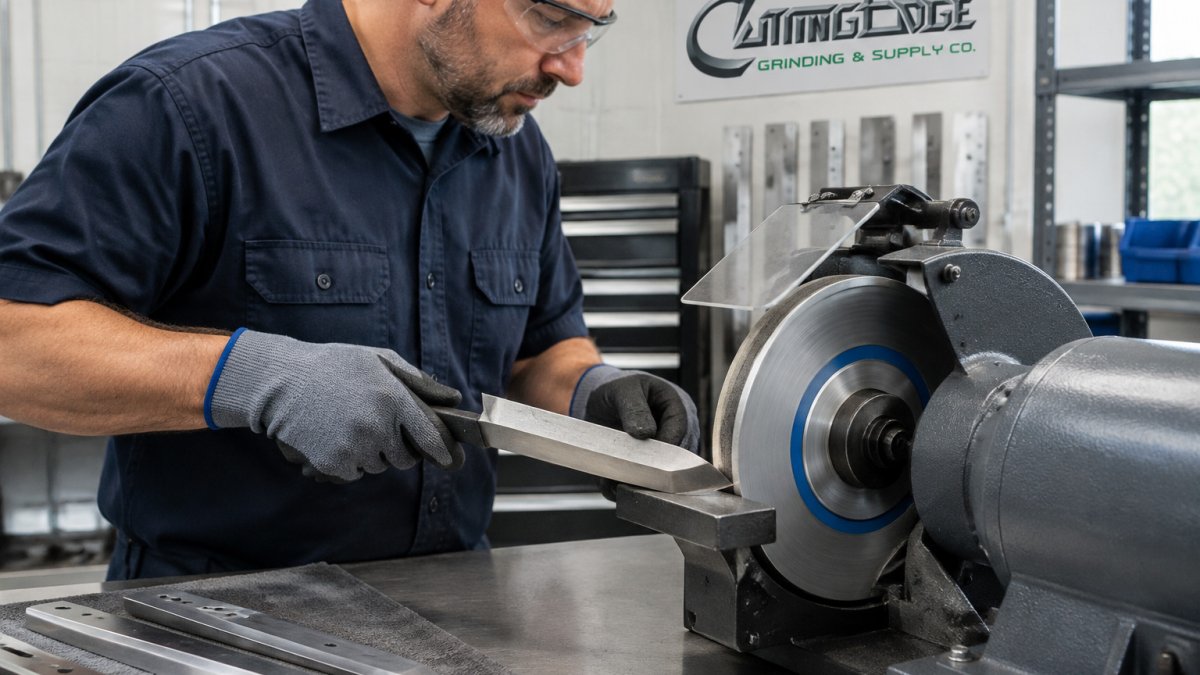
- Inspect the blade. Look for chips, cracks and uneven wear. Stop if you find cracks.
- Clean the edge. Remove paper residue, glue and dirt so you can see the real bevel.
- Mount the blade. Secure it so it cannot move during grinding.
- Set your angle. Match the original bevel as closely as you can.
- Take light passes. Use steady, even strokes with minimal pressure.
- Check progress often. Stop every few passes to look for a sharp, uniform edge.
- Deburr the edge. Lightly pass a fine diamond hone over the edge to remove the burr.
- Test the cut. Run a sheet of scrap paper through the cutter and look for a clean, straight cut.
Common mistakes include grinding too hard, changing the angle partway through, and skipping the deburr step. Each one can shorten the blade's life.
Maintaining the original bevel and consistent strokes
The original bevel is the key to cutting performance. If you change it, the knife may cut poorly even if it looks sharp.
Use the same stroke length and speed on every pass. Work the full length of the edge evenly. Uneven strokes leave a wavy edge that tears paper instead of cutting it.
The sharpening process comes down to a few steps, each with its own check, so the blade keeps its geometry and cuts cleanly.
| Step | What to do | Key check |
|---|---|---|
| Inspect the blade | Look for chips, cracks and uneven wear | Stop if you find cracks |
| Clean the edge | Remove paper residue, glue and dirt | Bevel is clearly visible |
| Mount the blade | Secure it so it cannot move | No movement during grinding |
| Set your angle | Match the original bevel as closely as you can | Angle matches the original bevel |
| Take light passes | Use steady, even strokes with minimal pressure | Edge stays cool |
| Check progress often | Stop every few passes to inspect the edge | Sharp, uniform edge |
| Deburr the edge | Lightly pass a fine diamond hone over the edge | Burr removed |
| Test the cut | Run scrap paper through the cutter | Clean, straight cut |
Paper Cutter Blade Sharpening: Safety, Mistakes, and Paper-Cut Quality
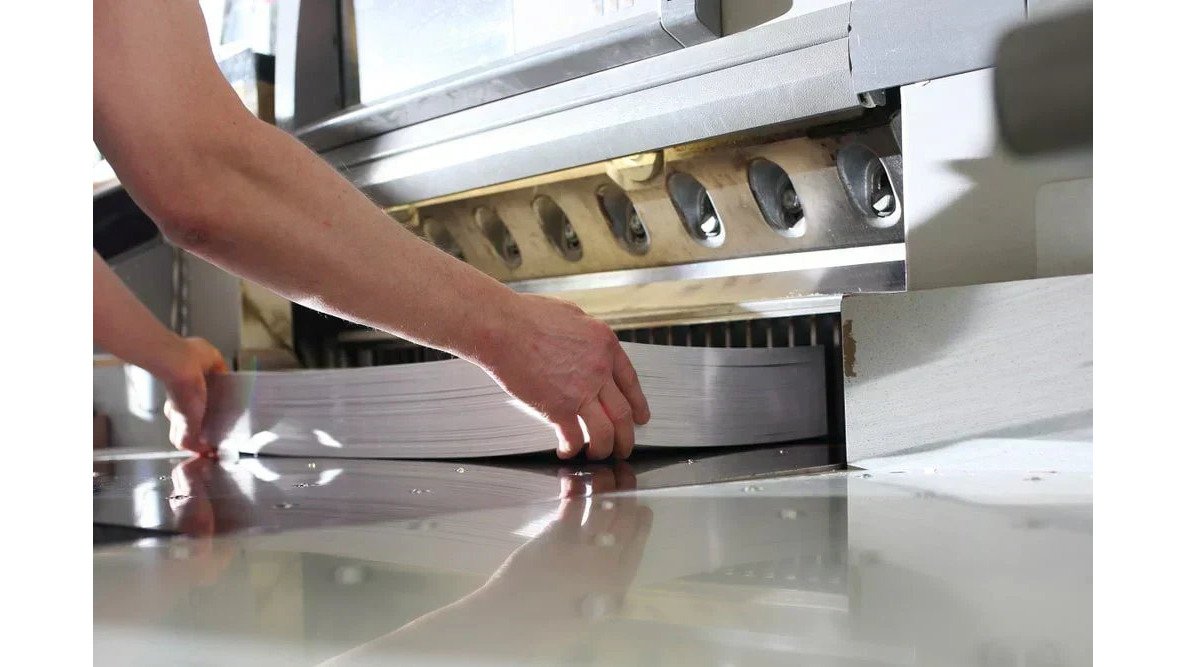
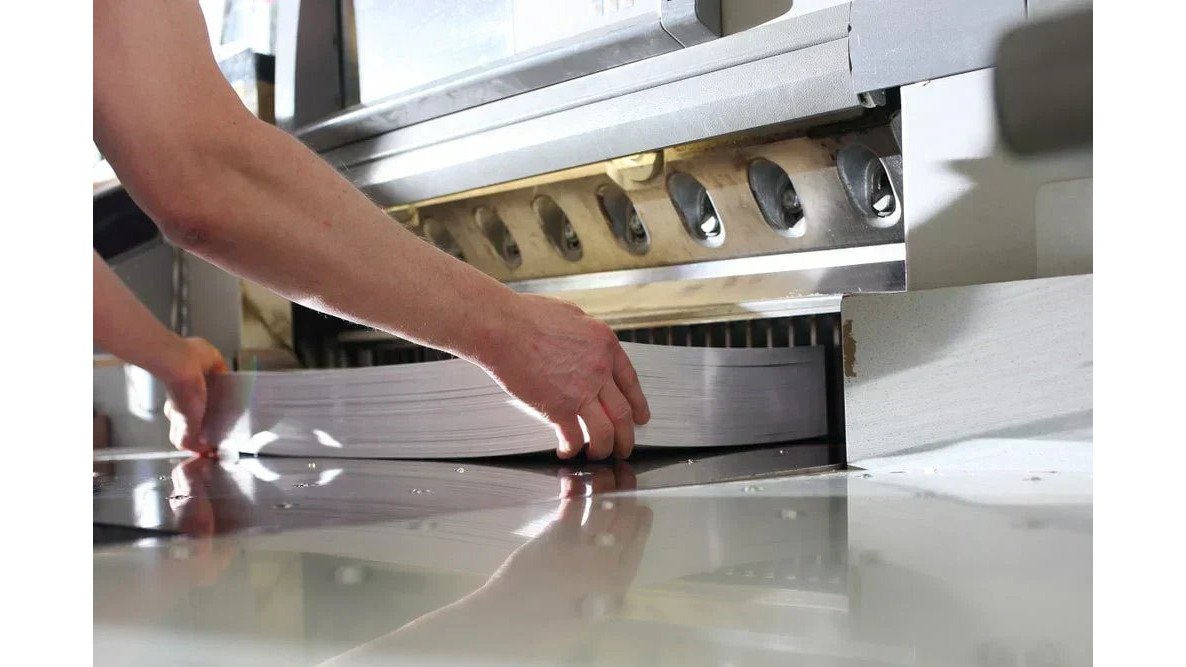
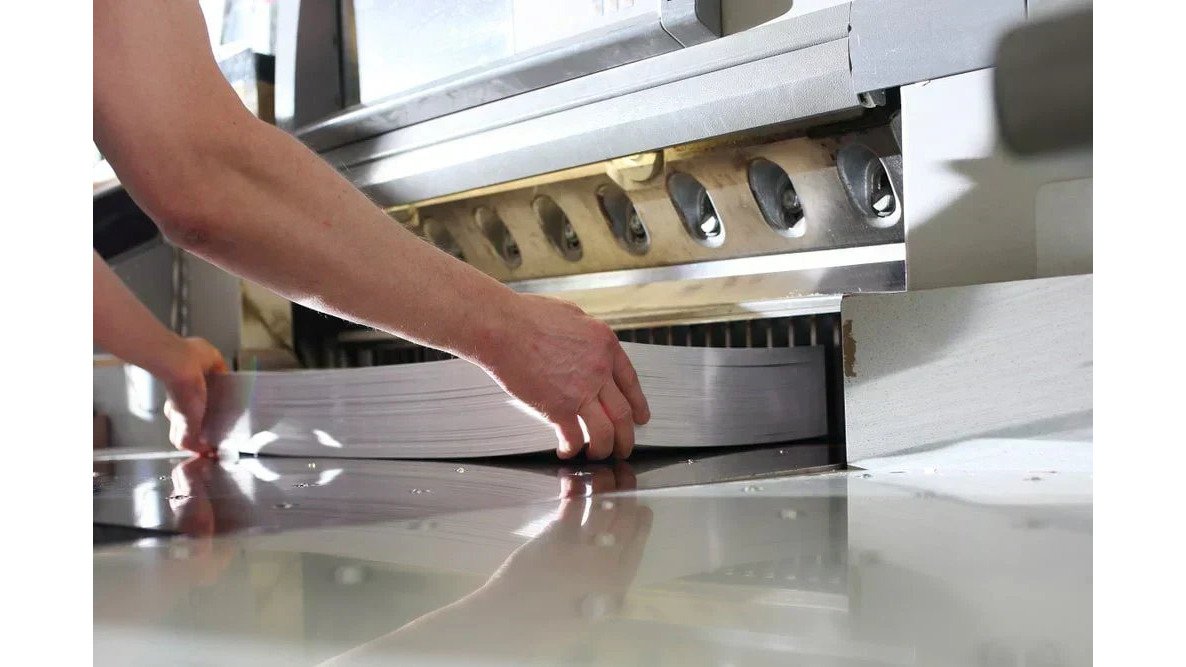
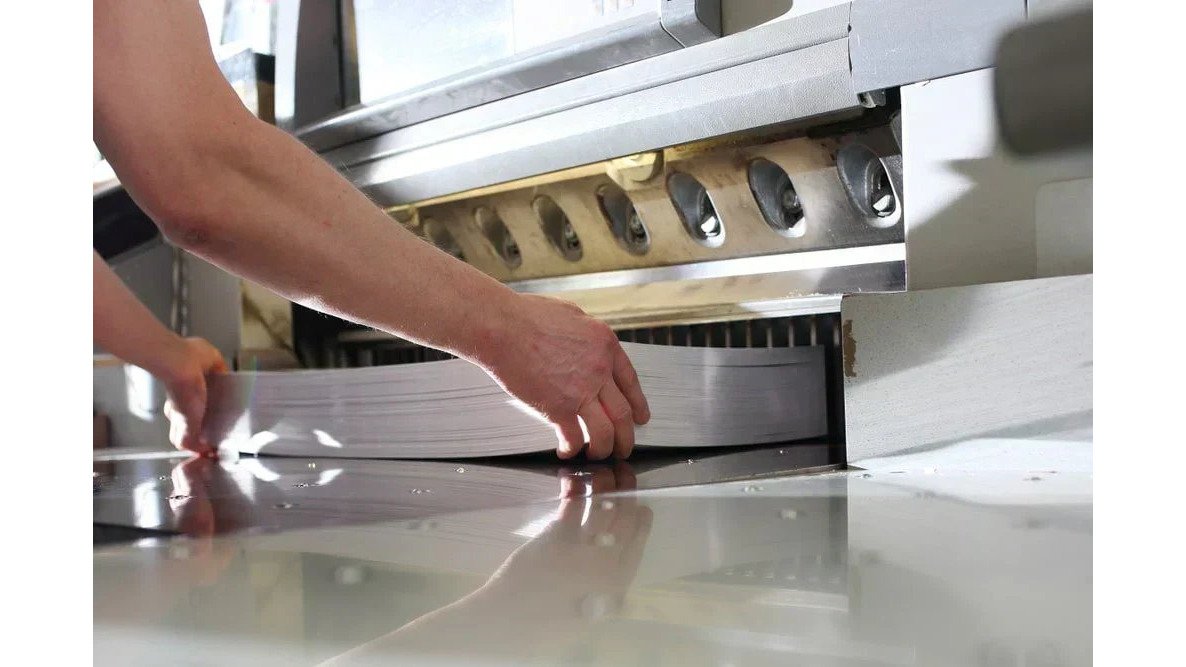
Safety comes first. Wear safety glasses and gloves, and keep fingers away from the cutting edge at all times. Lock out the cutter before you handle the blade. Carbide dust is a respiratory irritant, so wear a dust mask if you are grinding dry. Keep a fire extinguisher nearby, carbide dust and oil-soaked rags can ignite.
Diagnosing paper-cut quality. When a paper cutter starts producing bad cuts, the blade is not always the culprit. Work through this diagnostic sequence before you sharpen:
- Check the cut pattern. A clean, straight cut with slight edge curl is normal. Tearing, fraying, or ragged edges point to a dull or damaged blade. Crooked cuts that follow the same path every time usually mean the blade is not parallel with the bed or the clamp is loose.
- Inspect the blade edge under magnification. Look for chips, nicks, or a rolled edge. A burr on one side will pull the paper instead of slicing it.
- Check the clamp pressure. Insufficient clamping lets paper shift during the cut, causing uneven edges even with a sharp blade. Most guillotine cutters have an adjustable clamp; consult the manual for the correct setting.
- Check the cut stick or bed. A worn cut stick lets the blade push paper instead of cutting through it. Replace the stick if it is grooved or compressed.
- Test with fresh paper. Dull blades tear coated or heavy stock first. If only certain stocks fail, the blade may be marginal rather than completely dull.
Common sharpening mistakes. Grinding too hard overheats the carbide and can crack the braze joint. Changing the angle partway through leaves a wavy edge that tears paper. Skipping the deburr step leaves a wire edge that folds over and dulls quickly. Each one shortens the blade's life.
Guillotine blades are long and flexible, and holding a consistent angle by hand is difficult. If you cannot maintain the original angle closely, a professional sharpening service is the safer choice.
When to Sharpen In-House and When to Use a Professional Blade Sharpening Service
Sharpen in-house when the blade has light wear, you have the right diamond equipment, and someone trained is doing the work. Routine touch-ups fit this category well.
Send the blade to a professional service when:
- The edge is chipped or cracked.
- The blade needs to be reground to a precise geometry.
- You do not have diamond equipment or trained staff.
- Paper quality has not improved after your in-house attempts.
The Cutting Edge Grinding & Supply Co. offers precision sharpening services and new machine knives. Pricing depends on blade size, quantity and turnaround, so contact us for a quote.
Booking Your Next Blade Sharpening Job Without Long Downtime
Plan ahead to keep your cutters running. Schedule sharpening before the blade gets badly dull, not after it fails on a production run.
Tell us your blade type and cutter model when you request service. Ask us about current turnaround times when you call or request a quote.
Keep a spare blade on hand for critical machines. A swap takes minutes, while waiting on a sharpening job can take days. Visit The Cutting Edge Grinding & Supply Co. online to browse our blade range and request a quote for your next job.
Frequently Asked Questions
Can carbide-tipped paper knives be sharpened at home?
Light touch-ups are possible at home with a diamond abrasive, but carbide is extremely hard and a straight, even bevel is difficult to reproduce by hand. Sharpening a guillotine blade straight without proper machining equipment is very difficult and can damage the blade. For production knives, the safer choice is professional carbide blade sharpening on equipment built to hold geometry. Check the manufacturer's guidance before attempting any in-house work.
How can you tell when a paper knife needs sharpening?
Watch the paper, not just the blade. Clean cuts turning into tearing or fraying, cut edges that look ragged, stacks that shift or bow, and more force needed on the handwheel or cutting stroke all point to a dull edge. Inspect the edge for chipping or cracks before deciding. Chipped carbide usually means the blade needs professional regrinding or replacement rather than a quick touch-up.
Can sharpening damage a carbide-tipped blade?
Yes. Carbide can crack or chip if heat builds up or pressure is uneven, and removing too much material changes the cutting angle and alignment. Keep strokes light and consistent, cool the blade often, and avoid overheating. If the blade is out of flat or has edge damage, sharpening will not fix it and can make the problem worse.
Should a paper cutter blade be sharpened or replaced?
Sharpen when the blade is structurally sound and the edge has simply dulled. Replace when the carbide is chipped deeply, cracked, or has been reground so many times that it no longer meets its original dimensions. Compare the cost of a professional sharpening service against replacement, factoring in downtime, since a blade that is out for a day or two may still be the cheaper path. Pricing depends on blade size, condition, and turnaround, so request a quote for your specific blades.